Campos Verdes: a town born of emeralds
A road, a discovery and a new settlement. The human story behind a Brazilian emerald locality.
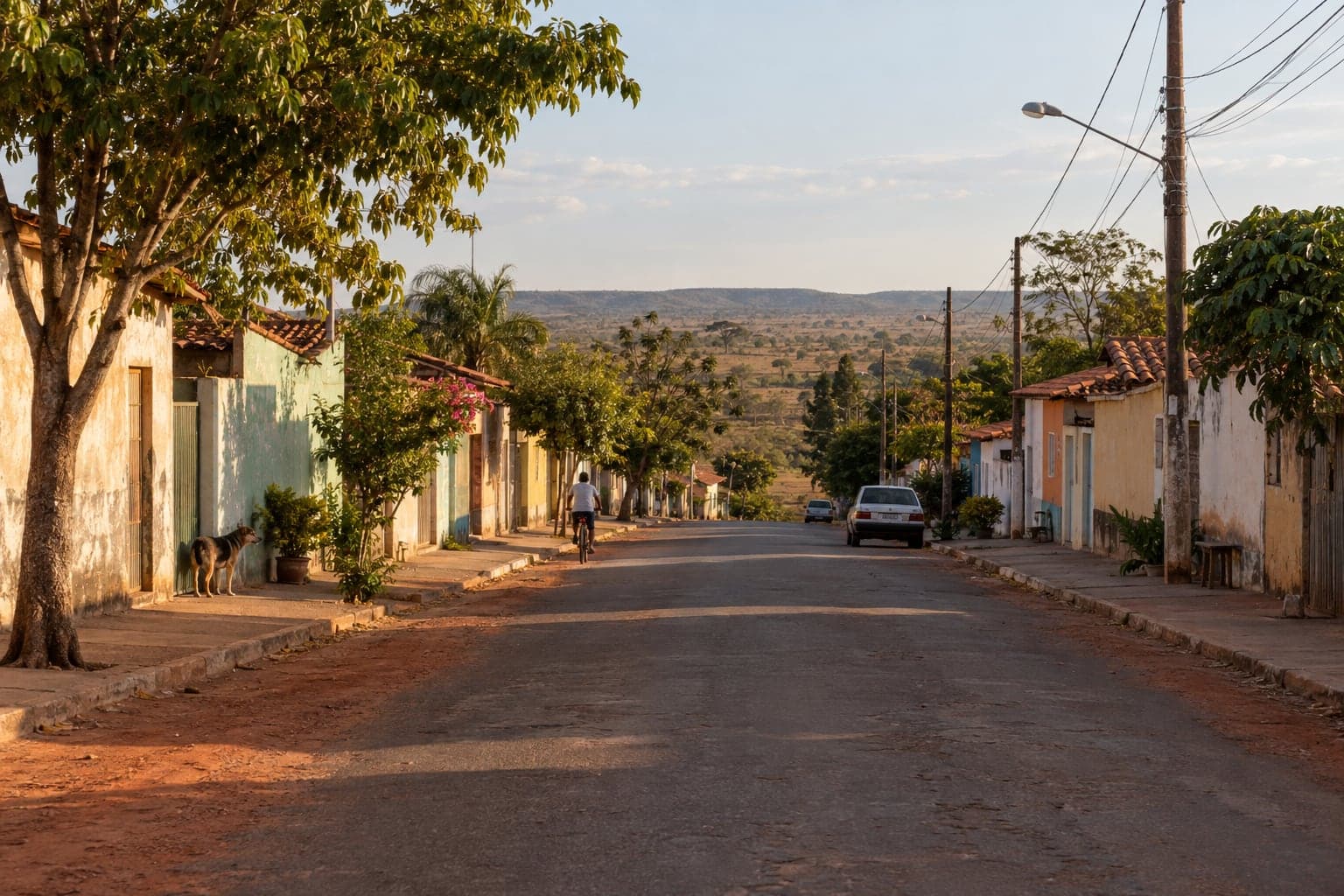
A gemstone locality can sound like a label on a tray. Campos Verdes invites a different kind of attention: to the people, movement and decisions behind the place name.
It began beside a road
According to the tourism inventory published by Goiás Tourism, road-grader operator Diolino Gonçalves da Silva discovered green stones in 1981 while working on the road connecting Santa Terezinha de Goiás and Martinópolis. Early explorers initially thought they were tourmalines. Recognition that they were emeralds drew miners to the area. Campos Verdes history, page 6 (PDF).
The same account describes a settlement first known as Garimpo and credits arrivals from Bahia with contributing trading knowledge and culture. On 30 December 1987, the settlement became the municipality of Campos Verdes. Its name honoured the green of its emeralds. Goiás Tourism’s account of its formation, page 6 (PDF).
There is something worth pausing over in that sequence. Discovery comes first, but the town’s story is not complete until people arrive, exchange knowledge and build a community. That is the part we find especially interesting when reading the history of a gemstone region.
Read the place before the promise
Our starting point for learning about a locality is simple: separate its history from claims about a particular stone. A compelling account of discovery can deepen your interest without answering every question about an emerald offered today.
For your own reading, try keeping a small page with three headings: the place, the people and the object. Under the first, record the location and historical dates. Under the second, note the named individuals and institutions in your sources. Leave the third for evidence about the specific emerald you are considering. Keeping those notes apart helps prevent a memorable regional story from becoming an assumption about an individual object.
A more generous view of origin
An interest in Brazilian emeralds need not begin with technical vocabulary. It can begin with a map, a municipal history or a question about how a settlement acquired its name.
We see that as a useful way into the subject: not romanticising everything connected with mining, and not reducing a place to a source of material. Read its own account, notice whose names appear and leave room to learn more. The stone may be what first catches your eye; the wider story is a reason to keep looking.