Before the final facet
A finished emerald is the result of choices. A closer look at the judgement behind the cut.
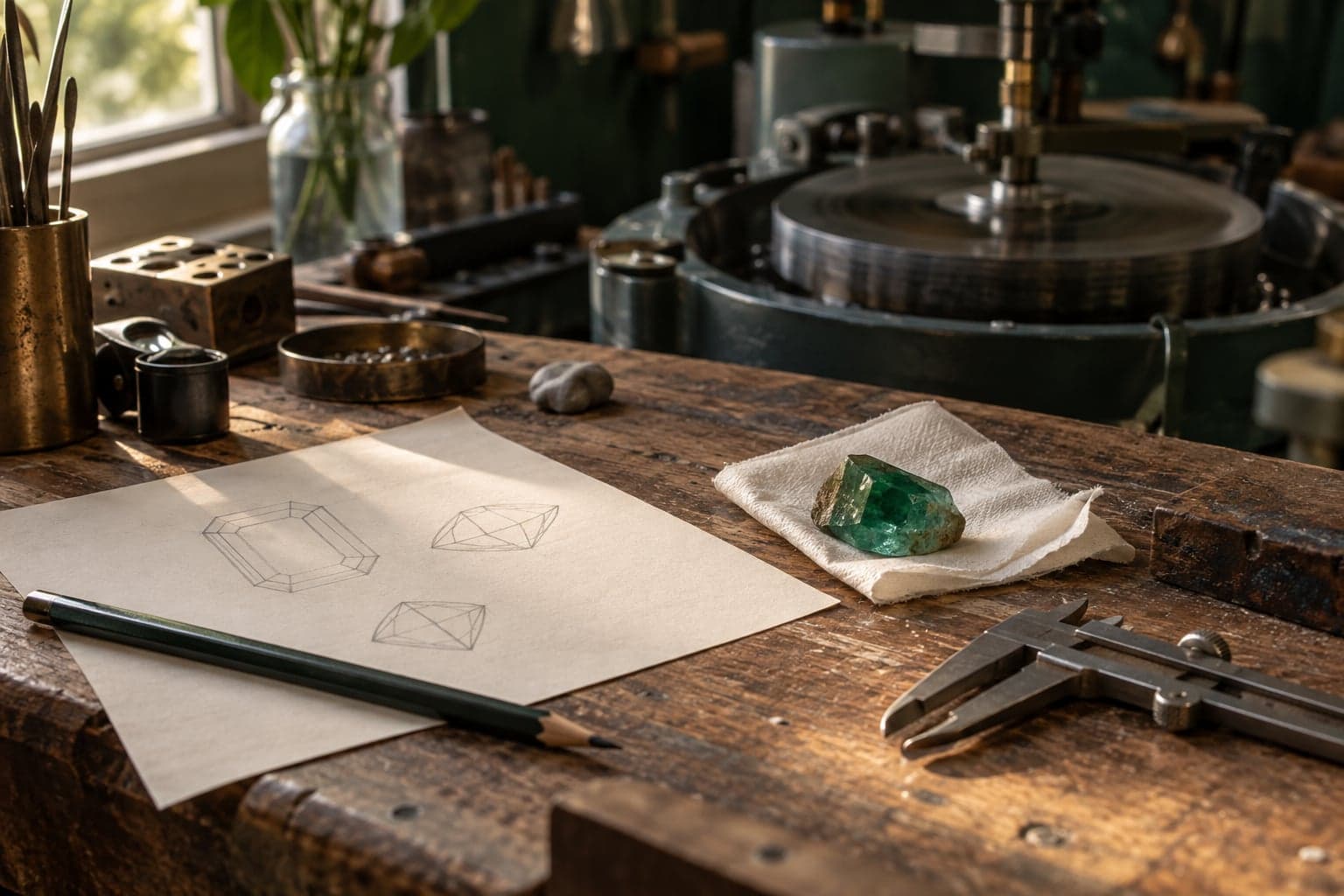
A polished gemstone makes an intricate sequence of decisions look effortless. Its outline feels settled. Its surfaces seem inevitable. The finished object gives little indication of how many other forms might once have been considered.
Looking at emeralds through the lens of craft changes the conversation. Instead of asking only what a stone is, it invites a second question: what judgement helped it become what you see?
The material sets the brief
An emerald cutter must take colour, inclusions and durability into account. GIA explains that fractures complicate cutting, while proportions and orientation influence the appearance of colour. The familiar emerald cut also gives vulnerable corners a more protected form. GIA: Emerald Quality Factors
Those considerations make the work more interesting than simply choosing a shape from a drawing. There is a relationship between the material in front of the cutter and the result being pursued. An attractive outline is part of that result, not the entire brief.
For someone new to rough material, this is a useful pause. The imagination can jump straight from a crystal to an ideal finished jewel. A conversation with a cutter is an opportunity to explore the space between those two things.
Ask about the decision, not just the shape
At a viewing or a specialist discussion, consider asking what alternatives were possible. Why was this outline chosen? Which part of the material needed particular attention? What would the cutter want someone to notice about the finished result?
You are not looking for a dramatic story of transformation. A careful, modest explanation can be more illuminating than a confident promise about what a piece of rough will become.
It can also help to separate the object you are looking at from any proposed future work. One is present; the other is a plan. Ask the person explaining that plan where their confidence comes from and where uncertainty remains.
Craft continues after cutting
The finished stone still deserves care. GIA distinguishes hardness from toughness and warns that heat can extend existing fractures in emeralds. Its care guide favours gentle cleaning with warm soapy water over ultrasonic or steam methods. GIA: Emerald Care and Cleaning
For a particular jewel, ask an appropriately qualified professional about its setting, condition and care needs before attempting maintenance yourself.
Appreciating craft does not require becoming a cutter. It begins with recognising that the finished appearance is a considered result. That recognition creates room for a richer conversation with the people who understand the material, and a more attentive relationship with the object itself.
Continue with the Club’s origin and craftsmanship story.