Shape is not the same as cutting style
Oval, step cut, mixed cut. A few useful distinctions for describing the stone you actually see.
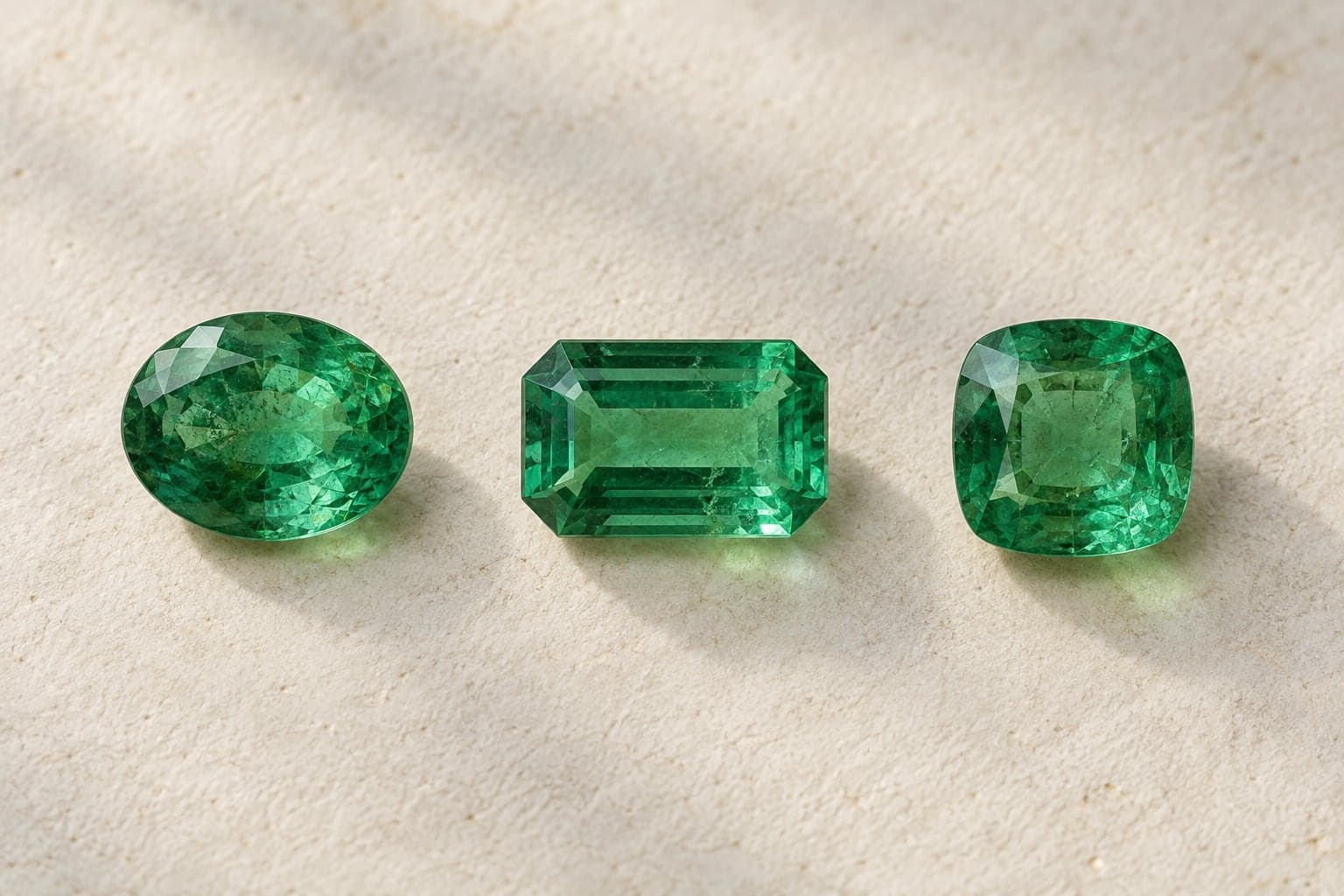
Two people can describe the same gem differently without disagreeing about what is in front of them. One may be talking about its outline, the other about its facets. Separating those ideas makes a jewellery conversation much easier to follow.
Outline first, facets second
Shape describes the outline you see from above. Cutting style describes the arrangement of facets. GIA’s guide illustrates the distinction with step cuts in both an emerald-cut outline and an oval. It also explains mixed cuts, which combine brilliant-style and step-cut arrangements. An oval, in other words, is not a complete description of how its surfaces have been fashioned. GIA’s cutting-style definitions.
The same guide names the major parts of a faceted stone: the crown above the girdle, the pavilion below it and the table facet on top. These few terms are enough to begin asking more precise questions without memorising a diagram of every facet. GIA’s guide to the parts of a gem.
A simple looking exercise
Choose a clear face-up photograph and make two quick sketches. In the first, trace only the outer edge. In the second, ignore the outline and sketch the broad arrangement of the surfaces you can see. You are not trying to recreate a cutter’s plan; the exercise is simply a way to stop using one description for two different things.
Next, put the photograph aside and describe what appealed to you in ordinary words. Perhaps you liked a long, quiet outline, a more rounded silhouette or the way the centre looked framed by its surrounding surfaces. Start there when speaking to a jeweller. Technical language should help express a preference, not replace it.
A description is not a verdict
Our preference is to use cutting terms as an opening, not as a ranking. Knowing a style’s name does not tell you whether you will enjoy a particular stone or how it will sit in a design you have in mind.
If you are discussing a piece of jewellery, ask to see the stone in relation to the proposed setting. Would you like the outline to be emphasised or softened? Are you drawn to symmetry, or to something less regular? These are design questions worth asking before reaching for a superlative.
The reward for learning a little vocabulary is not sounding more expert. It is being able to say more clearly what you see, what you like and what you would like someone to explain.