What colour can tell you about an emerald
Green is the first impression. Learning to look beyond it is where a more interesting conversation begins.
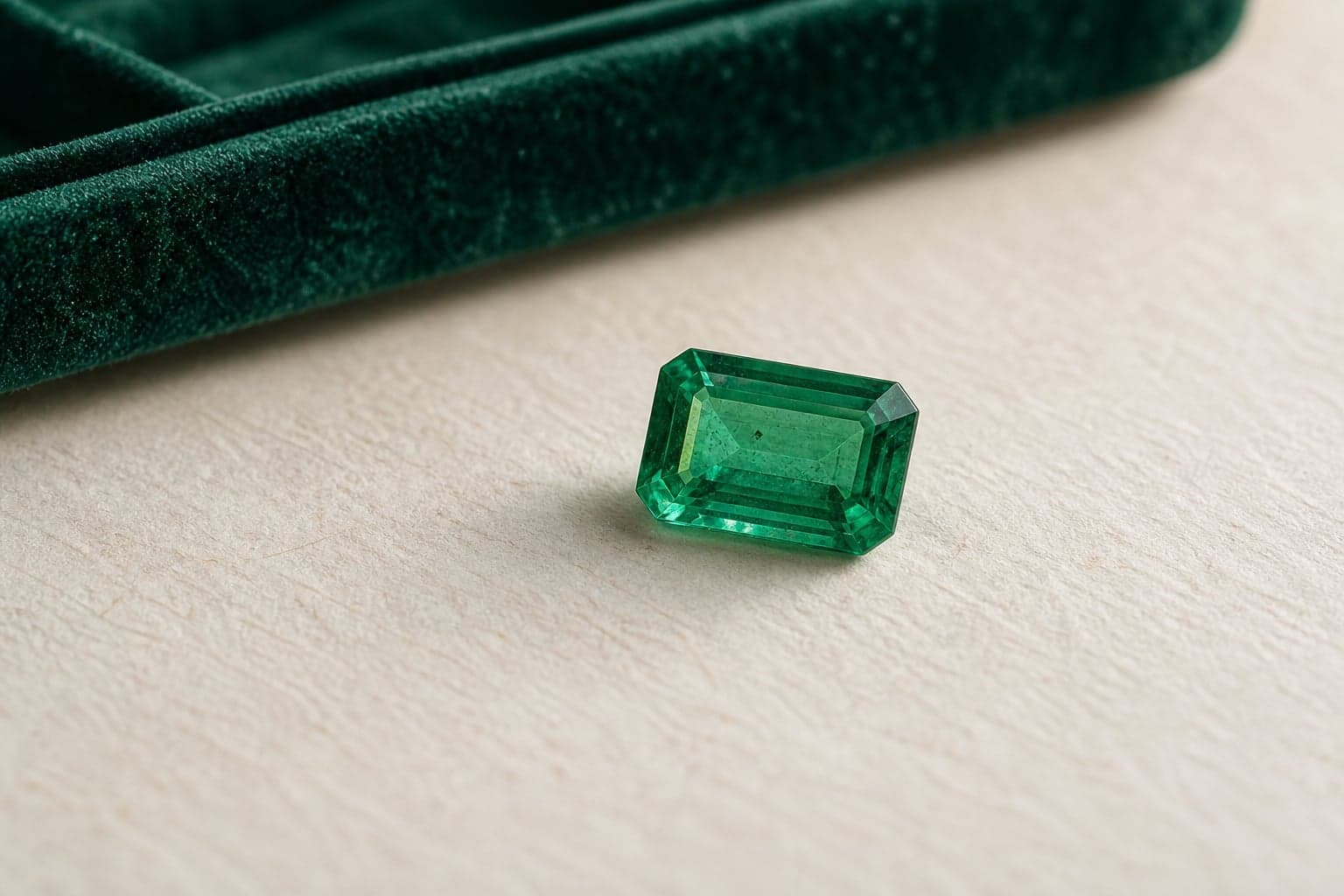
The first encounter with an emerald is usually a colour, not a specification. You notice the green before you ask about its weight, where it was found or what a laboratory has observed. That immediate response is part of the pleasure. It is also only the beginning.
For a collector, learning to look is not about replacing that instinct with a checklist. It is about finding language for what caught your attention, so the next conversation can be more precise.
Give the green a vocabulary
GIA describes desirable emerald colour in terms of green to bluish-green hue, strong saturation and a tone that is not excessively dark. Transparency and the distribution of colour also matter. These are distinct qualities, not different words for “greener”. GIA: Emerald Quality Factors
Try describing a stone before describing your preference. Does it feel bright or subdued? Is the colour even at first glance? What changes when you stop looking at the most striking reflection and consider the whole stone?
These are prompts for observation, not a grading method. Their usefulness is conversational: a specialist can respond to a specific question more meaningfully than to a request for “the best green”.
Leave room for what colour cannot answer
Appearance alone cannot settle a geographical-origin claim: GIA notes that emerald appearances overlap between sources. Colour is a reason to look closer, not a substitute for evidence. GIA: Emerald Quality Factors
That distinction is worth keeping even when a story is compelling. A photograph, an evocative name and an appealing description can all invite attention. None should do the work of a separate explanation of the stone and the information available about it.
Bring your own observations to a viewing, but leave space for questions you have not yet thought to ask. You do not need to pretend to know everything in order to have a serious conversation.
Try a short observation exercise
At your next viewing, make three notes before asking for the seller’s description:
- First impression: describe the colour in your own words, without assigning a grade or price.
- Whole-stone view: note whether your impression changes as you look beyond the strongest reflection.
- Next question: write down one thing you cannot establish by looking, such as the evidence for a stated origin.
Then compare your observations with the specialist’s explanation. Where the vocabulary differs, ask them to show you what they mean on the stone itself. This is an editorial learning exercise, not a method for authenticating, grading or valuing an emerald.
The useful result is a more specific question. You can enjoy a colour and still leave its origin, treatment and value open for proper examination.
For a wider perspective on the material, explore origin and craftsmanship.