Oil, resin and the question of treatment
Two separate questions make treatment easier to understand: how much clarity enhancement, and which material?
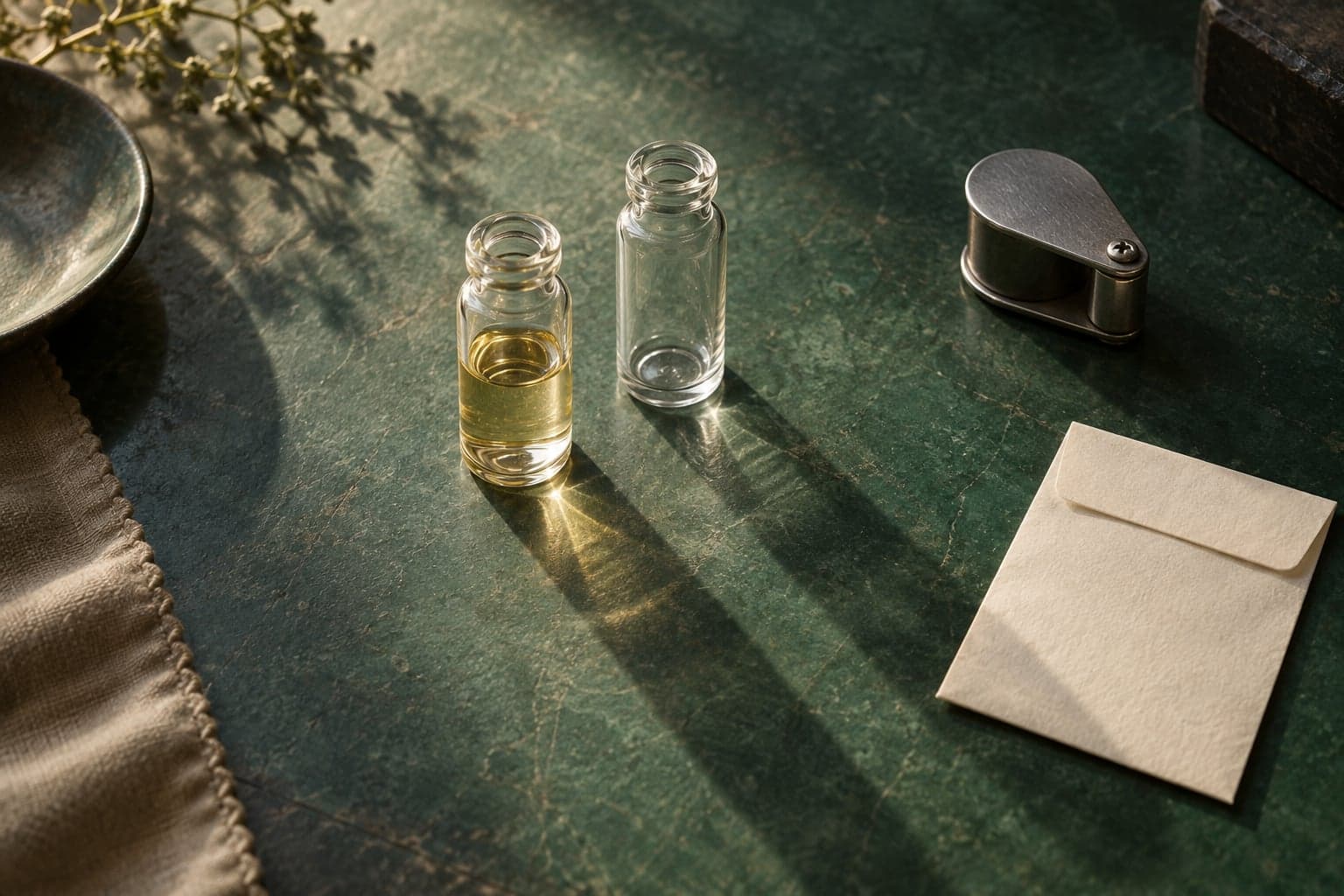
The word “treated” can stop an emerald conversation before it has really begun. A more useful response is to ask what was done, what has been identified and which questions the accompanying report actually answers.
What clarity enhancement means
Surface-reaching fractures in emeralds can be filled with substances such as oils, waxes or artificial resins to make those fractures less visible. GIA’s treatment guide distinguishes this improvement in apparent clarity from the underlying stone and notes that filling materials differ in stability. GIA’s introduction to gem treatments.
This gives a viewing two separate subjects: the emerald itself and the information about its enhancement. Our suggestion is to give each its own space in the conversation. Begin with the stone you are considering, then read the treatment wording without translating it into a vague “good” or “bad”.
Amount and material are different questions
In December 2024, GIA announced an optional filler-identification service alongside assessment of the degree of filling. Its stated conclusions include Type A, which may encompass oil, wax or natural resin; Type B, artificial resin; or a finding that the enhancing material cannot currently be identified. GIA also explains that fillers can be removed, changed or mixed. Type A therefore should not be casually rewritten as “oil only”. GIA’s emerald report announcement.
Reading a treatment report
How much is not the same as what.
How much?
The assessed degree of clarity enhancement.
What kind?
The filler identified, when that service is requested.
- Type A
- May include oil, wax or natural resin.
- Type B
- Artificial resin.
- Unidentified
- The filler cannot currently be identified.
These are material descriptions, not a quality ranking. Type A does not mean “oil only”.
GIA’s filler-identification guidanceWhen reading a particular report, look at what is actually stated rather than assuming every report contains every possible test. An unanswered question is a reason to ask for clarification, not to fill the gap yourself.
A clearer conversation
Before a purchase discussion moves on, we would ask the seller to provide the relevant report and their treatment disclosure together. Which wording refers to the extent of enhancement? Is the filler itself identified? Has anything been done to the stone since the report was issued? If the answers are incomplete, keep those questions open.
It is also worth explaining how you hope to use the emerald. A stone intended for a ring deserves a conversation with a qualified jeweller about that particular setting and its care. Ask for suitable handling and maintenance instructions in writing rather than borrowing a routine intended for another jewel.
Clear disclosure is not an interruption to appreciation. It is what allows the conversation to continue on more informed terms, with fewer assumptions on either side of the table.